

“You Could Pay More, But Why?”
By Ladosha Wright

Payless Shoes. Who remembers that slogan and those shoes? I do. I loved me some Payless Shoes. As a former teen mom, I can testify that Payless ShoeSource was a Godsend for those of us in the struggle and the throes of being a young mom supported by parents and extended family. I would say “Single Mother,” but my dad forbade me from ever using that term because he made it abundantly clear that I did not raise my sons by myself. He pointedly told me he had better not ever catch me referring to myself as “no single parent or single mother” because I had plenty of help.
Any whoot, I digress.
Back to the topic of paying more for less.
In the world of Black hair care, Black women are on social media sounding the alarm about paying more for hairstyles, while absolutely nothing new is happening in Black hair care to justify such tomfoolery. And you know what? I could not agree more.
Yes, I own a hair salon. Yes, I am definitely in the business of making money. But in the spirit of that old-school rapper from Compton, California, DJ Quik, “If it don’t make dollars, it don’t make sense.” And right now, I have no idea how hairstylists, natural hairstylists, locticians, trichologists, “healthy hair experts,” barbers, and everybody in between are charging more for services that show absolutely no innovation.
If you have been following me on social media or have read any of my articles, blogs, or books — yes, I used to be a columnist for Cleveland’s Call & Post newspaper — then you already know I loathe parts of the natural hair movement for that reason and that reason alone. Nothing against the “embrace your hair” initiatives. I am all for hair pride. But turning that hair pride into the ultimate game of charlatans absolutely behooves me.
A charlatan is someone who claims to have special knowledge, skills, or qualifications they do not actually possess, usually to deceive others for money, power, attention, or fame. Now, I could end this Substack article and drop the mic ri-chere, but Imma keep going.
Because the notion of a hair professional charging more without any special knowledge, advanced skill, real qualification, improved process, better result, or true innovation definitely translates into this question: You are paying more for less, but why?
Why are salons and barbershops charging more for hairstyles that take a whole lot of time, partly because many people do not know what they are doing or why they are doing it? Granted, some customers have a lot of hair. Some have very long hair. Some hairstyles do take time. Let’s be fair. But outside of that, why? Why more money when there is no innovation? No new method. No new chemistry. No new technology. No new professional standard. Nothing. Zero. Zilch. Nada.
What innovation, you ask?
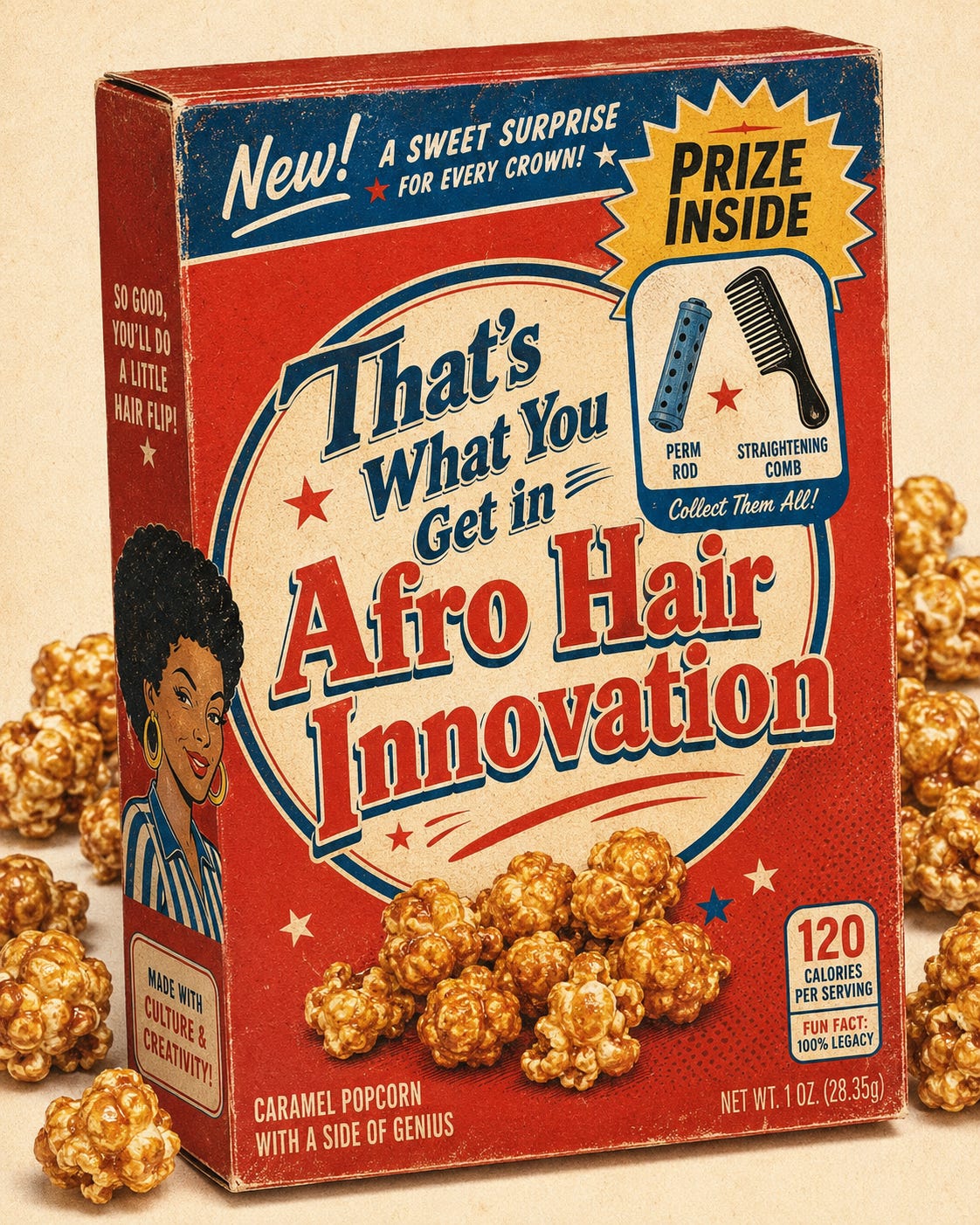
Here is a quick timeline of innovation in Black hair care that definitely warranted more time, more money, and more respect. Starting with Walter Sammons, the Black man often credited in the straightening comb patent conversation. Some may argue, but who cares right now? Then came Garrett Morgan’s Hair Refiner Cream. Then, Dr. Willie Morrow’s cold wave California Curl perm for Afro hair. Yep, that’s it. And aside from the straightening comb, the Hair Refiner Cream and the California Curl were specifically connected to Black hair professionals who were in the business of hair.
Those innovations created jobs beyond the chair. Salespeople, formerly known as agents. Graphic designers, formerly known as commercial artists. Writers. Packaging workers. Delivery people. Secretaries. Lawyers. Chemists. Educators. Manufacturers. That is what innovation does. It does not just make one person popular on social media. It builds an ecosystem.
Today, Sha Nay Nay and Key Lo Lo can claim they called on the spirit of Grandma Glodene and their personal hair problems, throw in some oil from Jamaica or the faraway land of Never Never, add some herbs, a pinch of emollient, a factory-grade blender, or grab that big wooden spoon your auntie had hanging on the wall back in the ’70s, mix it all up, and voilà: Sha Na Lo’s Hair Growth and Curl Defining Comb-Out Lotion for the Whole Family, Ya Ya and the Baby, is born.
Oh, and don’t forget to pray over it.
That part is not funny, though, because I am a firm believer in prayer. But how much is all of that really worth in the name of “Black-owned” when the so-called innovation stops at one person, her husband, their kids, and a team of ten?
This is America and beyond her borders. We know capitalism is going to capitalize. I guess. But according to the masses, there is no innovation in Black hair care worth some of these prices. And to be clear, this is not about dictating or criticizing what a person feels they and their services are worth. No. Hair professionals should be paid well. I believe that with my whole chest. But the price should match the progress.
Imagine paying for a smartphone that still has to be plugged into the wall, needs an antenna wrapped in aluminum foil and a hanger, requires a pen and paper, and comes with a call from your mama telling you to stop mixing your next batch of Imani’s Curly Crème so you can swipe to the next screen and post your latest reel.
You can’t imagine that, can you?
Neither can your customers.
Innovation is the only reason to raise the price of anything in business, capitalism, socialism, and common sense, according to Key Lo Lo. Sha Nay Nay may differ. Now, thermochromic technology in hair color? Oil-lightening innovation for removing pigment from hair? Enzyme technology to alter the texture of Afro and curly hair? That’s what you get in Cracker Jacks! I mean, innovation.
The cost of salon and barbershop visits definitely has to go up to be commensurate with the cost of living. Rent is higher. Products are higher. Utilities are higher. Professional tools cost money. Continuing education costs money. Labor costs money. I am not ignoring reality.
But charging more in the name of “everything old is new again” is a lie. While it may make dollars, it does not make sense. Customers may be dumb, but they are not plum dumb. I knew it was only a matter of time before the marketplace woke up to that nonsense.
Our industry price structure should not mirror health care, where nobody understands the bill, everybody is confused, and somehow the price keeps climbing even when the service does not improve. I won’t take you down that rabbit hole today.
However, I will encourage and invite everyone with innovative ideas to bring them to the forefront. Share with us what you see as the next big thing in the world of hair beyond recipes, apps, tools, bonnets, and scarves. We need some of those things, no doubt. But that is not always innovation related to the fabric of hair itself.
Customers are not against paying more.
They are against paying more for less.
They are looking to pay more for more: more knowledge, more skill, more efficiency, more professionalism, more technology, more innovation, and more results.
Because “You could pay more, but why?” was cute for Payless Shoes.
But in Black hair care, that question is starting to sound like a warning.