

Too Good for the Hood
By Ladosha Wright

The Boogie Boys understood the assignment when “Fly Girl” hit in 1985.
Because what made a girl fly? Her hair.
Yeah, the clothes mattered. The jewelry mattered. The shoes, the car, the zip code, the credit card, the degree, the drink, and the designer label all had their place. But in the Black community, none of it meant as much if the hair wasn’t right.
Hair spoke before you did. A sharp cut. A well picked Afro. Finger waves. Crimps. Pin curls. Sculpted baby hairs. Sleek wraps. A ponytail laid to the heavens. Braids so clean the parts looked measured by the ancestors.
That was not “just hair.” That was language. That was credibility. That was presentation. That was protection. That was proof that somebody knew exactly what they were doing. And let me say this part clearly: the hairstyle was only as strong as the person behind the chair.
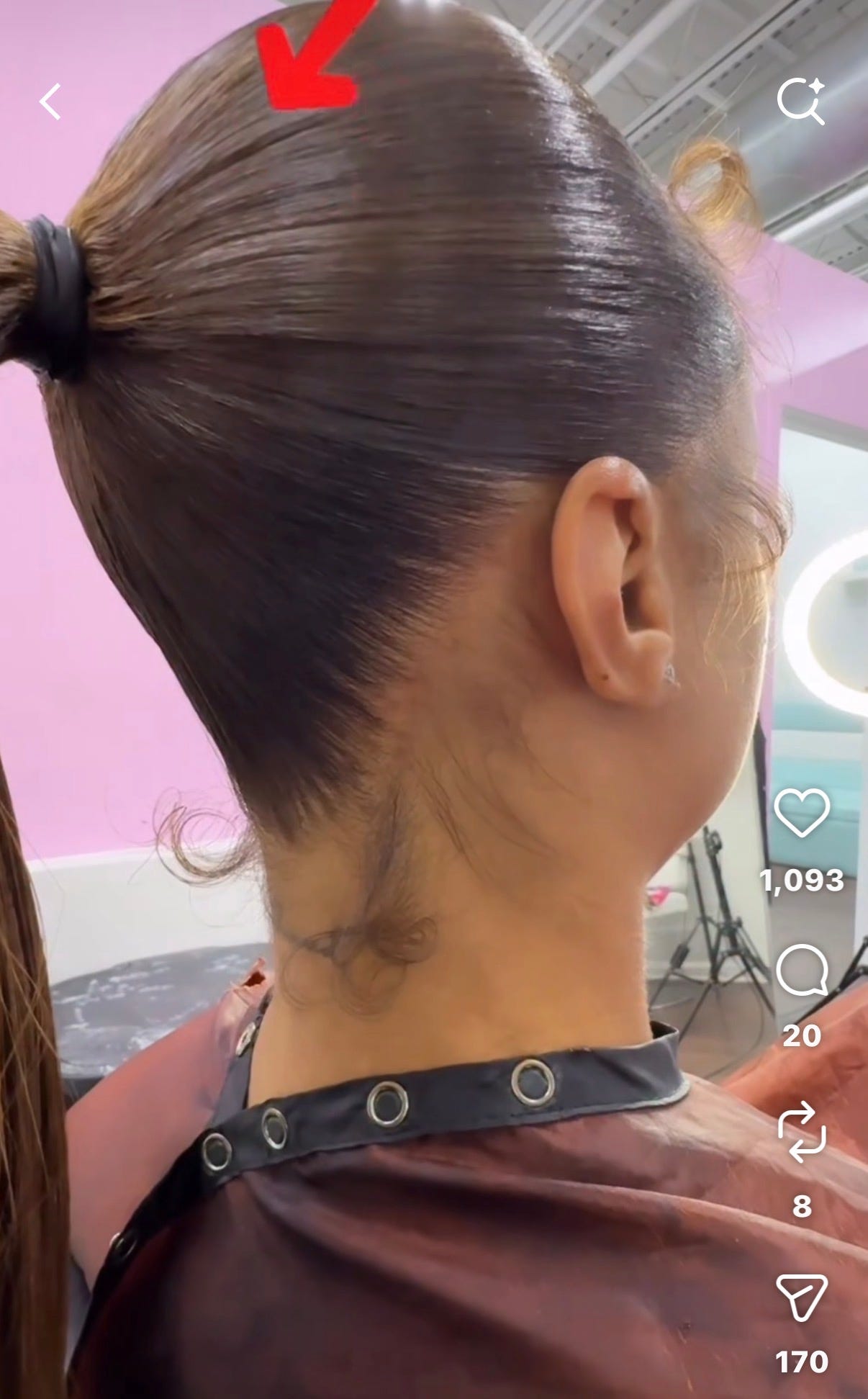
Back then, and still today, the stylist and barber were the stars. The person wearing the style was the beneficiary of the craft. All to kudos went to and belonged to the hands that created the look. Being the person who “did” hair meant something. People knew who did your hair the same way they knew who cooked the food. A hood hairstyle had a signature, it went along with neighborhood, and its city. Detroit. New York. Atlanta. California. Louisiana. South Carolina. Cleveland. Chicago. Philly. Wherever the style came from, its signature carried rhythm, region, technique, attitude, and the hands that made it happen.
You could look at a hairstyle and automatically know exactly where it came from. If you were a connoisseur of hairstyles, you knew who did it.
That is the part certain people in the beauty industry keep skipping. They want “do” the hairstyle without the hood. They want the influence without the origin. They want the look without the lineage. They want the trend without the technician. They commit acts of doing this as if no connoisseur is observing. Oh, but we are.
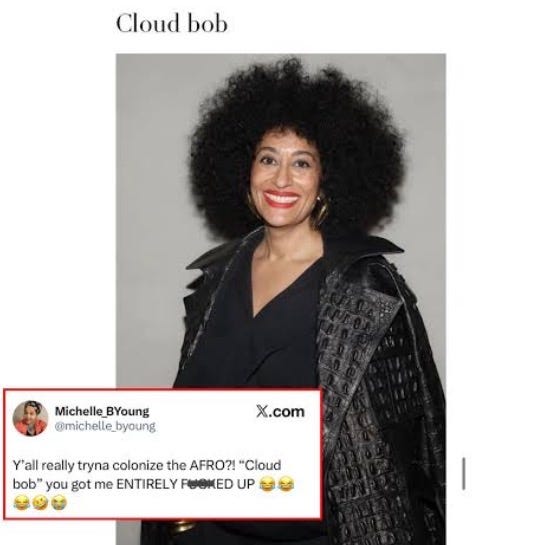
And with social media, celebrity culture, beauty influencers, editorial hairstyling, reality TV, and trend-chasing content, I am watching hood hairstyles get lifted, renamed, watered down, repackaged, and presented back to the public like somebody just discovered the Afro.
Let me say this plainly: hood hairstyles are not up for grabs like that.
The audacity to recreate them under the guise of “artistic expression,” while ignoring the people and places that birthed them, is an insult. Especially when the work itself is not even done right.
I see it at professional trade shows. I see it in advanced education classes. I see it on reality TV. I see it in print. I see it in digital media. I see it on social media. Half crocked bootleg hairstyles masking as inspiration from the hood. Crooked parts. Weak foundations. Wrong products. No shine. No detail. No cleanliness. No finish. Just plain old tacky. No understanding of what the style is supposed to do once the person leaves the chair. A person who is coiffed with a hood hairstyle can literally leave the fashion show, trade show, photo shoot, class, and TV set with the actual style and carry on with their day; you know like they do makeup. To make matters worse, upon being mislabeled as “the signature” look, the accolades go to the celebrity hairstylist, influencer, celebrity, content creator, beauty editor, or whoever is the flavor of the moment, instead of the hairstyle. Even though their efforts resulted in a bad hairstyle, the person, the culture, the company, the fashion designer; everybody gets recognition or a shout out, except the person who originally created the look.
That is where the problem begins.
Hair and fashion may walk together, but they are not the same thing. They definitely go hand in hand in the same spaces. But the difference is, clothes come off. Hair does not. A fashion designer can create a garment for a certain body, frame, mood, location, or moment. But a hood hairstyle has to live with the person within the setting wherever it is, regardless of the person. It has to go to work. It has to go to church. It has to go to the clinic. It has to pick up the kids. It has to survive weather, sweat, errands, stress, dancing, romance, sleep, scarves, bonnets, and somebody asking, “Who did your hair?”
Hood hairstyles come with unspoken contracts and oaths.
Yes, oaths.
The first oath is meticulousness. The second oath is lasting. Then comes flavor, shine, neatness, balance, and that thing we call “it had to give.”
The Afro had to be perfectly round. Regardless of the shape, all Afro had to be precisely on point. Parts had to be clean. Curls had to fall right. Wraps had to swing. Feathered styles had to fluff. Braids could not have one fly away. Not one. The ponytail had to sit exactly where it was supposed to sit. The baby hairs could not look like an afterthought. The braid pattern could not look confused. The cut could not be almost right. The entire style had to speak without explaining itself.
That level of acumen is not accidental. That is not just skill. No ma’am. That is savant-level work. That is mastermind technique. That is education, whether it came from a licensed school, a salon, a barbershop, a kitchen, a basement, a back porch, or somebody’s auntie who could do a full head faster than most people can find their comb.
So yes, I am perturbed.
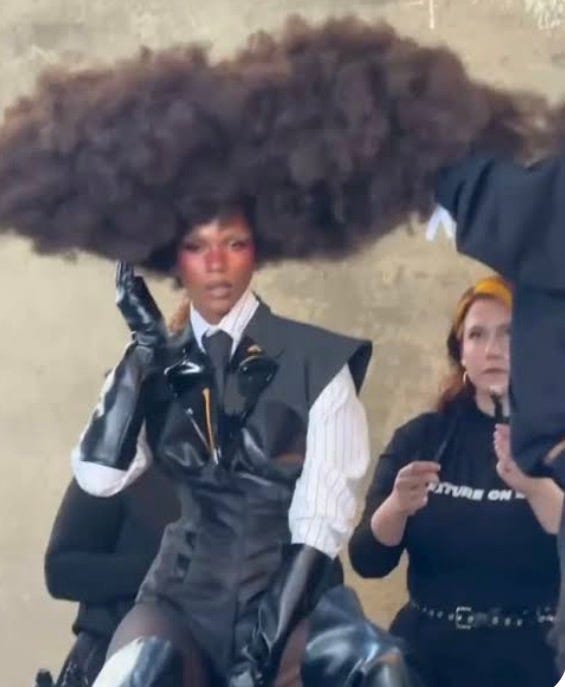
I am perturbed when I see certain celebrity hairstylists, influencers, editorial teams, and beauty professionals reach into hood culture, pull out a hairstyle, do it all wrong, label it and then lawyers come in and with half crocked efforts to put it in a law for the right to wear it, when we been wearing it and the law was already passed in 1967. I become more perturbed when it gets dragged into hair shows and trade shows and dressed up with adjectives like “inspired,” “edgy,” “urban,” “nostalgic,” “vintage,” “bold” “risky,” “avant-garde,” or “a comeback.”
A comeback from where?
Because where I’m from, these styles never left. They did not disappear because the show was over, fashion magazines stopped printing them. They do not vanish because runways ignore them. They do not go underground because beauty schools fail to teach them properly. They do not need a celebrity, a red carpet, or an editorial spread to make them credible.
But too often, the beauty industry wants the hood’s creativity without the hood’s people. It wants the style without the stylist. It wants the aesthetic without the accountability. It wants to profit from the same looks it once dismissed as ghetto, too much, unprofessional, loud, tacky, or beneath the standard of “real” beauty. These tactics are taken directly from the play book of “ghetto nails.” Who can recall a time in the 80’s and all through the 90’s when long nails, gold nails, nail art, junk nails, red polish, and black nail polish were all considered “ghetto?”
The hood creates it. The hood births it. The hood perfects it. The hood wears it. The hood gets judged for it. Then somebody with proximity to fame wears it in a different setting, location, zip code, renames it, and voila, automatically it becomes in vogue, chic, raised, or better yet, “the” trend!
GTFOH.
What makes this even more frustrating is that many hood stylists and barbers do not have the platform, protection, or industry access to defend their work. They are too busy working. They are building clientele. Raising families. Paying booth rent. Managing salons. Squeezing in walk-ins. Fixing disasters. Teaching themselves. Teaching others. Keeping culture alive in real time.
Meanwhile, the industry is busy deciding which parts of their work are finally worthy of recognition. That is why this conversation matters. This is not just about a hairstyle. This is about authorship.
This is about erasure. This is about the difference between being inspired by a culture and extracting from it. This is about who gets called creative and who gets called unprofessional. Who gets paid and who gets policed. Who gets credited and who gets copied.
And let me be clear: I am not saying hood hairstyles must be locked away from the world. Hood hair styles like all other hair styles have always traveled. Culture moves. Style evolves. Influence is real. But without acknowledgment, the influence automatically morphs into a theft of sorts known as perpetratin’. Not to be confused with perpetrating.
If you are going to borrow from the hood, then respect the hood. Name the source. Credit the stylists, study the technique, honor the standard, don’t reveal the contract, and respect the oath.
Nobody in the hood is gatekeeping. That concept can’t even live there.
The hood gifts the world.
The hood is one of the world’s greatest cultural tastemakers, sending out infinite contributions for others to be inspired by, build from, and benefit from. But because so many people from the hood are left behind, pushed aside, or choose to stay rooted in the place that made them, don’t rob them of their contribution.
Don’t disrespect the source.
Don’t misrepresent the work.
Don’t turn your back or your nose up at the very people who made it possible for you to capture, copy, recreate, or reflect hairstyles from the hood.
Word.